In this issue
|
| |
Thank you for choosing to bring your child to music class.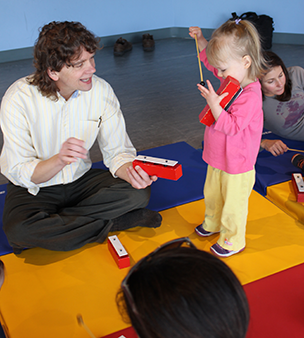
You make a lot of choices for activities to engage your child with (even deciding to go to park on a nice day is a chosen activity) and I am confident that you’ve made a wise choice to have your family participate in Music Together classes. What, specifically, informs my confidence? Many reasons, but brevity is the soul of wit, and being at least half-witted, I’ll mention just three: Firstly, music ability is one of the basic intelligences of the brain—we all have musicalness built into our brains that can be nurtured and enriched, especially—and most effectively—in young children, from infancy on up. Secondly, music-making can be a positive social experience, shared by groups of people, adults and children, and positive social experiences are vital for a young person’s developing psyche. Thirdly, the musical experiences that are presented in class (and reinforced with your take-home music) have a breadth of variety in tonalities, moods, and styles that will engage your child in myriad ways.
|
| |
Music is "Key" to development.
The Maracas Collection and songs in different musical keys
Speaking of variety, the Maracas song collection—like all the Music Together collections—has variety. Lots to discover, lots to emulate (sing and tap along with), lots to grow fond of. If I may get technical for a moment, every time we have class, your child is presented with a handful of songs from the collection, and those songs are arranged to highlight their variety. For example, this week’s classes are experiencing songs in the musical keys of C major, D major, D minor, E major, E minor, G major, G-flat major. A musical key means that a song (or any piece of music) is going to focus on a specific set of related tonalities or pitches, different from pitches related in another key. (I told you I was going to be technical.) The take-away here is that your child experiences engaging songs that demonstrate different pitch relationships for your child’s brain to take in and process. (Compare this week’s class and at least seven different keys with an hour of pop hits off the radio or streaming that may represent three keys—the same three from the previous hour! And will be the same the following hour!!)
Variety of keys is excellent development material for your young child (as well as more interesting and engaging for all of us!). In class, I observe children--who have been in my classes for a while and are very comfortable with our class routine--vocalizing tones (some might call it babble) after each song had changed in pitch--and their babble shifts to match tones in the song we were just singing! I see examples of this sort of musical internalizing regularly (and I will try to point it out when I hear it in your class) and it is always gratifying to me to hear another child’s musicality bubbling to the surface.
|
| |
Can you hear the Maracas?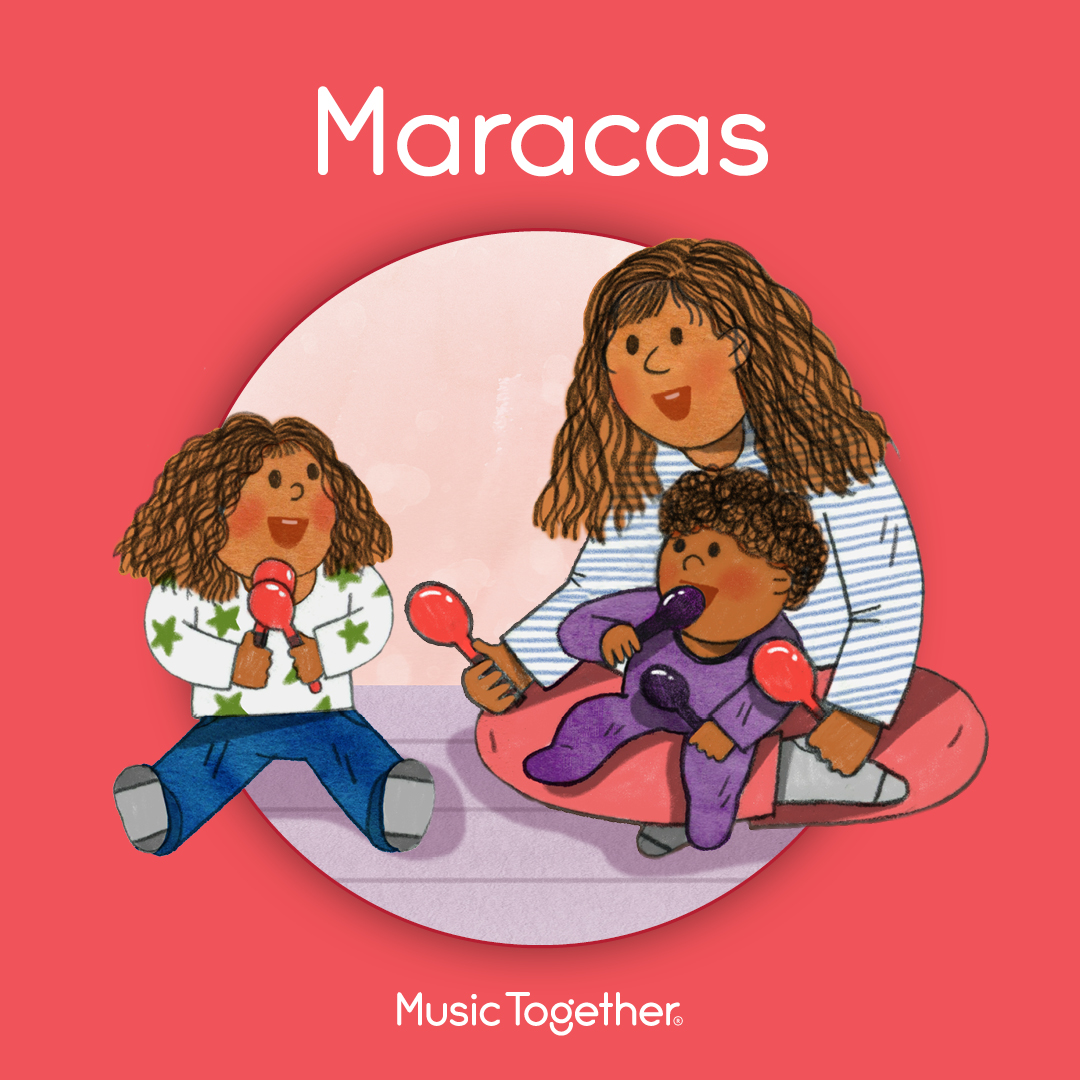
Variety of musical key is accompanied in the Maracas song collection with the other musical varieties of mood, tempo, meter, instrumentation, etc. I’ll address those other varieties another time, but speaking of instrumentation—I have a challenge for you, dear reader. The next time I see you in class, tell me which songs in the collection actually have maracas playing in them! OK, I'll give you a hint: I hear them in two of the songs. Maracas make the shake-a-shake-a-shake sound, like our red shaker eggs, like the cabasas. (Which are fancy maracas, I'm holding a cabasa in the photo below attached to the Summer Session notice.)
|
| |
Make things up (when singing to your child)!
When you're singing at home (in the car, at grandpas, wherever), try giving the Maracas Songs new lyrics. Sometimes in class, Mr. Mark substitutes new words for songs, words that are not in the recordings you listen to all the time with your child. He does this because a) he has trouble remembering the words on the recordings, but mostly b) because inventing new verses encourages the participants (that would be you and your child) to focus on the specific task as hand (hearing and following the new words!) without getting too distracted (staying in the pattern of the original song). When a song develops this way, it's helping your child to note what to pay attention to and what to ignore, thereby supporting an important emerging Executive Function--Attention Control.
Word substitution, sound (vocable) substitution, action substitution--all these possible substitutions within the steady (sort of) format of the original song.
|
| |
The best song for a lullaby 
Short answer: Any song you sing to your child at bedtime!
Slightly longer answer: While putting your child to bed, try singing a song that you know, even if it's not a traditional lullaby. Pick one of your favorite songs: a pop tune, classic rock ballad, gregorian chant, whatever kind of music you love! Sing it softly and slowly. You child will sense your heartfelt connection to the music and they'll love having you sing it to them. They may even go to sleep!....eventually.
|
| |
Summer Session 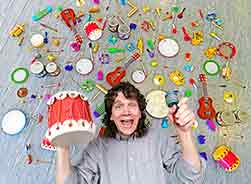
Mr Mark's Summer Session--featuring his own personal song collection just for his families (of which you are one)--is approaching--mid June through July. (It's not a Music Together collection, but just as fun, just as musical!) Classes inside in Lake Bluff and outside at Old School Forest Preserve (kind of Libertyville) REGISTER HERE!
|
| |
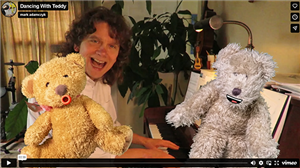 Dancing with Teddy and Mr. Mark! Dancing with Teddy and Mr. Mark!
Here's a classy video for you to enjoy at home between classes. No commercials! Mr. Mark singing along with teddy bears about teddy bears. See the video
There are also more Mr. Mark Music videos HERE
|
| |
 Music Together Resources Online Music Together Resources Online
Make sure you avail yourself of the FREE extra resources available to families on the Music Together Corporate Website. The web link for these wonderous resources is: http://musictogether.com/forenrolledfamilies
|
